
Machinery lifting systems: industrial equipment and applications
Blog > Machinery lifting systems: industrial equipment and applications
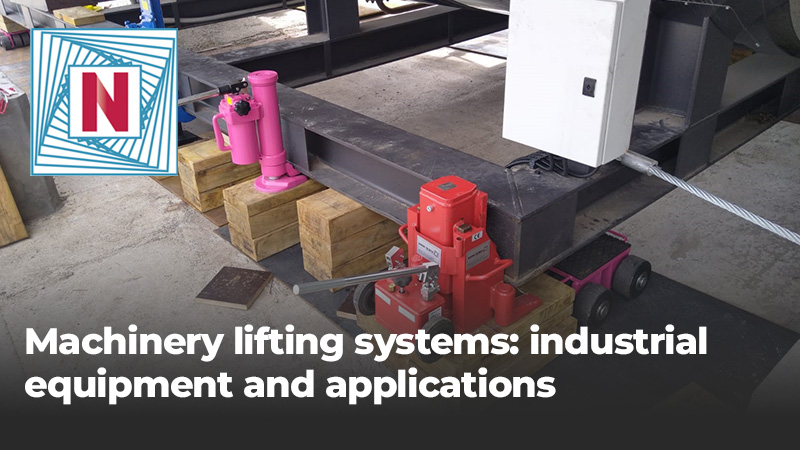
Lifting heavy loads is the first operational step in installing, maintaining or repositioning machinery in an industrial setting. Nuova Tecnica’s experience in the sector enables us to identify reliable solutions for working safely, even with bulky components and heavy loads.
- Lifting as the first stage of handling
- Operation and use of lifting systems for machinery
- Types of industrial lifting systems
- Hydraulic, pneumatic and electric systems
- Lifts for confined spaces and heavy loads
- How to choose the correct lifting system
- Load capacity, height and operating conditions
- Mistakes to avoid when choosing equipment
- Critical issues in lifting industrial machinery
- From lifting to material handling
- Applications of industrial lifting systems
- Sectors where lifting systems are used
- Safety in load lifting
- Frequently asked questions
Lifting as the first stage of handling
When working on machinery, lifting is the first operation required to handle heavy machinery safely. Whether it is installation, maintenance or realignment, it is essential to prepare the technical space to carry out work without placing stress on the structure.
At this stage, systems capable of handling and supporting heavy loads come into play, even in complex conditions such as confined spaces or limited access points. This is achieved through the use of solutions such as lifting bags, which allow work to be carried out where other devices cannot operate.
Lifting ensures the load is secured before any work is carried out. To understand how this stage fits into a broader process, it is useful to consider the concept of material handling, which encompasses all activities related to the management of machinery in an industrial setting.
Operation and use of lifting systems for machinery
Lifting systems operate via mechanisms that generate force in a controlled manner, enabling even very heavy loads to be lifted without upsetting their balance.
The operating principle is based on the ability to apply a progressive and controlled thrust, avoiding sudden movements or stress on the machinery’s structure.
The use of these systems varies depending on the type of operation: they are used to create technical space during maintenance operations, to realign machinery or to prepare it for positioning. In all cases, the aim is to ensure the absolute stability of the load.
It is useful to analyse the main types of lifting systems used in the industrial sector, based on different operational requirements.
Types of industrial lifting systems
In the industrial sector, there are various systems designed to adapt to different spaces and operational requirements. The choice of technology depends on the load capacity, lifting height and the level of precision required, especially when working on heavy or bulky machinery.
Hydraulic, pneumatic and electric systems
Hydraulic systems are among the most widely used for lifting heavy loads, thanks to their ability to develop force in a progressive and controlled manner. In applications requiring stability and precision, toe jacks are widely used, capable of operating on heavy loads whilst maintaining control at every stage.
To gain a deeper understanding of how these systems work, it is also useful to consider the role of toe jacks, used for targeted work on specific points of the machinery. Conversely, for operations from low points, the hydraulic jacks allows the machinery to be lifted with precision even under complex operating conditions.
How to choose the correct lifting system
The choice of lifting system affects safety, operational efficiency and the integrity of the machinery. There is no one-size-fits-all solution; each application requires a precise assessment of the load, context and method of operation, avoiding generic or improvised approaches.
In particular, when lifting is part of broader operations such as plant management or activities related to warehouse logistics, it is essential to choose equipment that is consistent with the entire operational process.
Load capacity, height and operating conditions
Among the first factors to consider are the load capacity, expressed in tonnes, along with the weight distribution and the centre of gravity of the machinery. Added to these are the required lifting height and the operating conditions, namely available space, support surface and accessibility.
In complex situations or operations such as industrial relocation, it is necessary to use systems capable of ensuring control and stability throughout all operational phases, preventing uncontrolled movements.
Mistakes to avoid when selecting equipment
- Underestimating the actual weight of the load: using equipment that is not correctly sized can compromise safety and stability.
- Ignoring operating conditions: confined spaces, uneven surfaces or limited grip points require specific solutions.
- Using equipment unsuitable for the application: generic solutions reduce lifting control and increase the risk of damage to machinery and operators.
Critical issues in the lifting of industrial machinery
The lifting of industrial machinery involves various critical issues linked both to the nature of the load and to the operational context. Working with heavy loads requires continuous monitoring, especially in the presence of uneven surfaces or confined spaces.
Among the most frequent problems:
- Unbalanced loads: an uneven distribution of weight can cause instability and stress on the structure.
- Vibrations during lifting: these can compromise load control and make the operation less precise.
- Restricted operating space: this limits the use of certain equipment and makes lifting management more complex.
- Uneven flooring: affects the support of the equipment and the distribution of forces.
- Risk of tipping: may occur where the centre of gravity is off-centre or during uncontrolled lifts.
In these conditions, it is necessary to use systems that allow for progressive lift management, supported by devices such as hydraulic pumps, which are essential for regulating pressure and maintaining control.
From lifting to material handling
Lifting is only the first stage: once secured, the machinery must be moved and positioned in a controlled and safe manner.
Incorrect management of this operation can affect subsequent stages, particularly in the more complex activities involved in moving machinery.
Correctly integrating lifting and handling reduces risks in every industrial application.
Applications of industrial lifting systems
Lifting systems are used in various industrial contexts where work needs to be carried out on heavy machinery or bulky structures:
- installation and positioning of machine tools
- maintenance and realignment of production plants
- handling and management of steel components
- lifting of generators, transformers and industrial machinery
- work on production lines with limited operating space
Regardless of the context, every operation requires particular attention to load management, an aspect that leads directly to the issue of operational safety.
Safety in load lifting
Load safety is a central element in every lifting operation. The use of suitable equipment and adherence to operating procedures allow work to be carried out whilst minimising risks to operators and machinery.
It is essential to always check the capacity of the equipment, use suitable supports and wear the required PPE. Correct lifting management safeguards, first and foremost, thesafety of those involved, reducing exposure to risks and ensuring safe working conditions.
At Nuova Tecnica, we have been specialising in lifting, handling and stair transport for over 40 years. We supply machinery and maintenance services across various industrial sectors where the transport of heavy loads is required.
Sectors where lifting systems are used
Lifting systems are used in numerous industrial sectors, where the handling of loads is essential to ensure the efficiency of production processes. In particular, within warehouses and production facilities, these systems play a crucial role in the handling of heavy and bulky materials, enabling safe and precise operations.
In the metalworking industry, for example, lifting equipment is essential for the assembly and maintenance of complex machinery, helping to optimise operational times and reduce the risks associated with manual lifting. The variety of technologies available, such as hydraulic or pneumatic lifts, allows companies to choose the solution best suited to their specific needs, thereby improving productivity and workplace safety.